On a bright sunny afternoon, there’s no mistaking where the cooler air lingers—it’s under the shade of a tree. As cities grow denser and the heat intensifies, finding comfort outdoors often depends on how much tree canopy surrounds us. Across Denver, every leafy branch plays a quiet but powerful role in transforming pavement-heavy spaces into livable, vibrant environments. At the National Western Center, trees are more than landscape features; they are active contributors to a healthier urban ecosystem, shaping how people experience comfort, connection, and community across our campus.
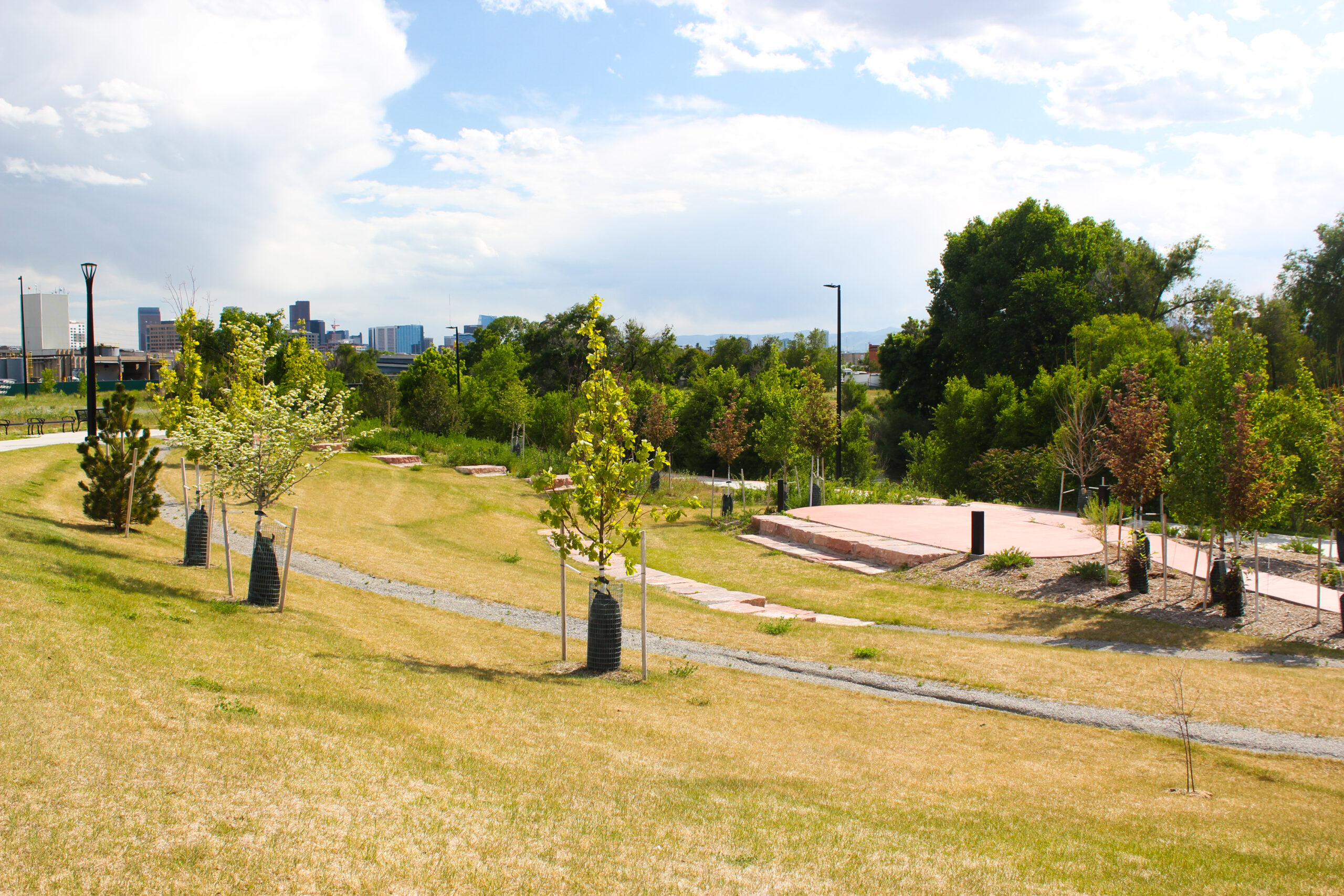
Trees in urban landscapes provide several benefits, most notably the ability to cool down hot temperatures in their shade. Within the shelter of a tree canopy, temperatures can drop noticeably, providing relief from the heat and making outdoor spaces more comfortable for people, plants, and animals alike. The National Western Center campus spans nearly 250 acres. Within that space, there are over 600 trees, more than 1,000 shrubs, hundreds of flowers, and several acres of native grass and turf. The remainder of the campus consists of pavement and buildings, which contribute to what’s known as the Urban Heat Island Effect. This effect generates elevated temperatures as sunlight reflects off non-absorbing surfaces, such as concrete and steel. On an extra hot day, the temperatures can feel even more intolerable when surrounded by pavement. The Urban Heat Island Effect can be mitigated by leaving more space in the urban landscape for surfaces that can absorb the sun’s rays, such as leaves, grass, and absorbent building materials like bricks. Here at the NWC, we aim to help balance the heat by incorporating trees in the right places.
Measuring the Cooling Effect of Trees
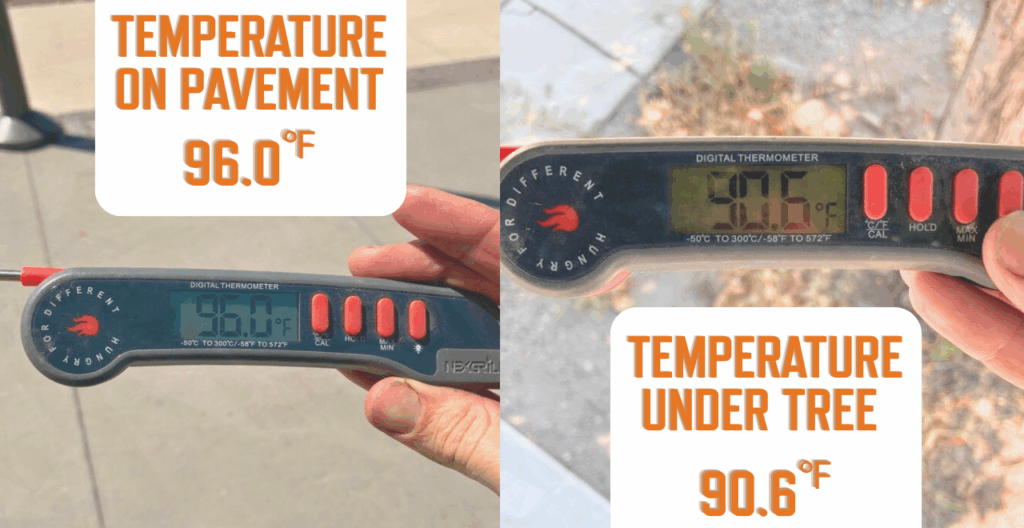
We have taken the time to prove just how valuable trees and their canopy can be in lowering urban temperatures affected by the Heat Island Effect. Our team has measured temperature differences of up to 5 degrees between heat radiating off the pavement on a sunny day and the cooler air within a tree’s shade canopy. Shade from larger, more mature trees can contribute to an even greater temperature drop, creating noticeably more comfortable microclimates. Recent research and local reporting confirm this dramatic impact across the city. Some Denver neighborhoods with limited tree cover can experience temperatures as much as 9 degrees hotter than shaded blocks only a few miles away (Colorado Sun, 2024). As urban areas like Denver continue to grow and face warmer conditions, the need for trees and green space becomes more urgent. That is why intentionally placed trees and shrubs are found along streetscapes and at the edges of broad concrete plazas on our campus.
These trees act as natural cooling stations, breaking up large expanses of pavement with shade and shelter from the sun. Their presence is more than aesthetic; it’s a strategic, environmentally focused approach that encourages outdoor community use and aligns with our broader sustainability goals. Over time, these shaded areas enhance day-to-day comfort and strengthen long-term climate resilience, making them an essential part of the campus experience in every season.
Caring for the Canopy
The National Western Center cannot manage all the trees on campus alone, which is why partnerships are essential. Our partnership with CSU Spur has proven invaluable. Additionally, the Department of Urban Forestry has lent their time, expertise, and energy to the active care and management of our tree canopy. In addition to boots-on-the-ground stewardship, digital tools play a critical role in monitoring the health and lifecycle of our trees. One such tool, CO-TreeView, a digital tree plotter provided by the Colorado State Forest Service, supports communities and urban centers across Colorado in tracking the benefits of increased tree cover. As we move forward, the National Western Center team is committed to building an integrated and diverse tree canopy on campus. Offering community members and visitors alike a respite from the urban heat and the many ecological and social benefits that shade trees provide.
More than landscaping, our canopy embodies our commitment to sustainability and community well-being. Together, we’re cultivating a cooler, greener, and more vibrant Denver for generations to come.
Find more about our campus sustainability efforts at the National Western Center’s sustainability page!
References:
Colorado Sun. (2024, July 17). Denver neighborhoods without trees get 9 degrees hotter than rest of the city. https://coloradosun.com/2024/07/17/denver-heat-islands-climate-change-weather/
Stories from the center
Recent Stories